Finding Your Sound: The Best Desktop Monitor Speakers for Creators
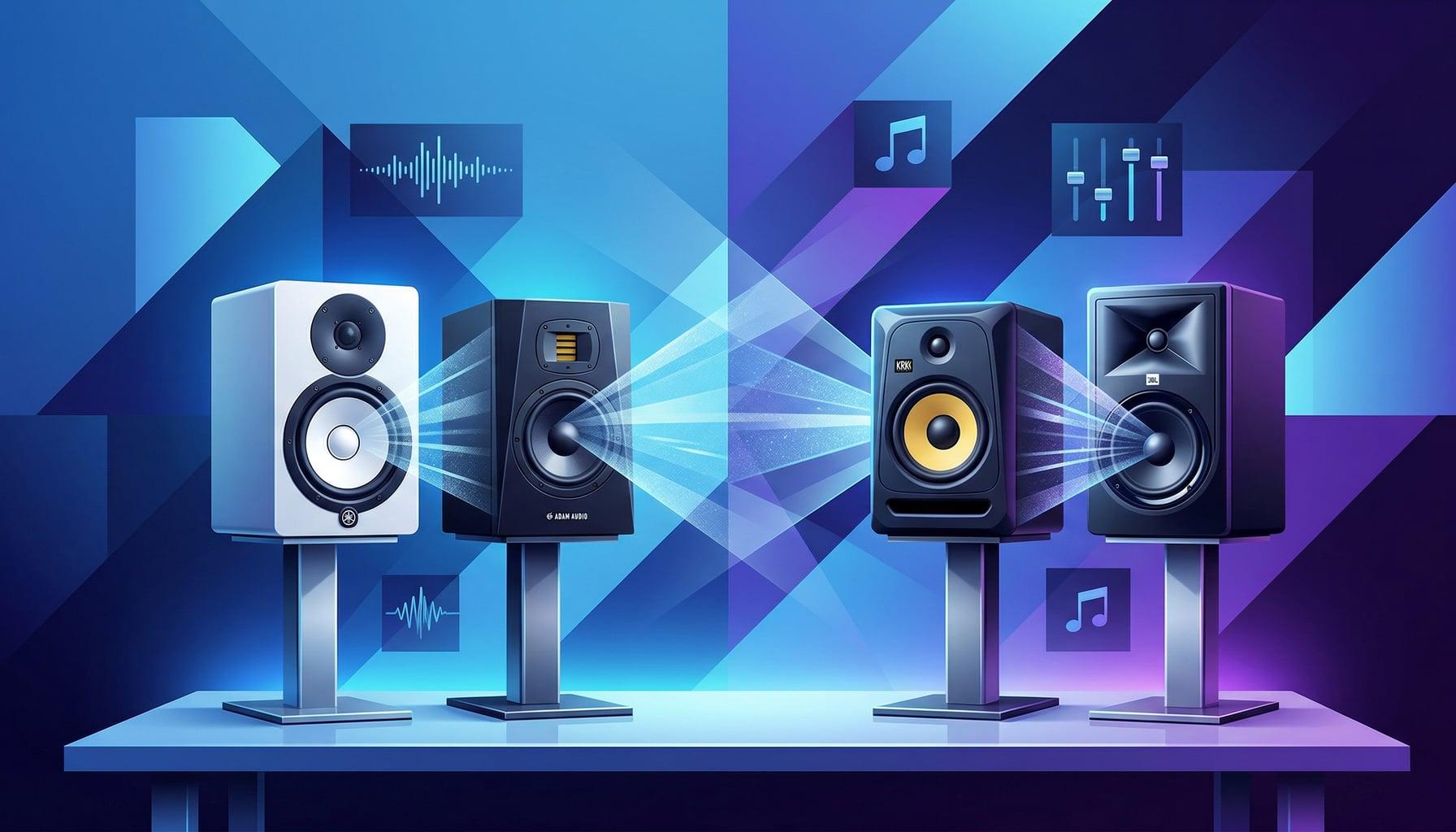
TL;DR: Stop guessing on your audio mixes. Studio monitors provide the flat, accurate sound crucial for video editing and music production. We'll explore top picks like the reliable Yamaha HS series, the detailed ADAM Audio T5V, and the budget-friendly JBL 305P MkII to help you find the perfect speakers for your desk.
---
Your Audio is Lying to You
You’ve spent hours color grading your latest video, the visuals are perfect. You export, upload, and then play it back on your phone—only to find the dialogue is muddy and the music overpowers everything. What happened? Your speakers lied to you.
Most built-in monitor speakers, and even popular consumer speakers like those from Logitech or Bose, are designed to make music sound good, not accurate. They boost bass and sweeten high-end frequencies. For content creation, this is a disaster. It means you're making mixing decisions based on a flattering, inaccurate sound profile. To create work that sounds great everywhere, you need speakers that tell you the truth.
Why Studio Monitors are Different
Studio monitors are designed for one primary goal: to provide a "flat" frequency response. This means they don't artificially boost or cut certain frequencies. The sound they produce is an honest, uncolored representation of your audio. This allows you to hear exactly what's in your mix—the good, the bad, and the ugly—so you can make informed decisions when editing dialogue, mixing music, or mastering a final track.
Here are some of the best desktop monitor speakers that will immediately elevate your audio game.
The All-Rounder Champion: Yamaha HS Series
If you've seen a picture of a home studio, you've likely seen the iconic white-coned Yamaha HS5. There's a reason for their popularity. They are famously—some would say brutally—honest. They have a clear, accurate sound that translates exceptionally well to other systems. If your mix sounds good on a pair of HS5s, it will likely sound good everywhere. For a smaller desk, the newer HS4 model offers a more compact footprint without sacrificing that legendary accuracy.
Best for: Anyone needing a reliable, industry-standard reference.
Price Point: Mid-Range.
The Detail-Oriented Alternative: ADAM Audio T5V
For those who crave clarity in the high frequencies, the ADAM Audio T5V is a fantastic choice. Featuring the company's signature U-ART ribbon tweeter, these monitors deliver an incredibly detailed and precise top end. This is perfect for hearing subtle nuances in dialogue, foley, or the reverb tails in a music track. They offer professional-grade performance at a price that won't break the bank.
Best for: Editors and producers who need to hear every last detail.
Price Point: Mid-Range.
The Producer's Choice: KRK Rokit 5 G4
You can spot the yellow cones of KRK Rokits from a mile away. Favored by electronic and hip-hop producers, these monitors are known for their solid low-end response and a slightly more "vibey" sound than the Yamahas. The latest G4 (Generation 4) models include a built-in DSP with a visual EQ, allowing you to tune the speakers to your room—a high-end feature now available at an entry-level price.
Best for: Music producers or anyone working on bass-heavy genres.
Price Point: Budget to Mid-Range.
The Best Bang for Your Buck: JBL 305P MkII
If you're just starting out, the JBL 305P MkII is arguably the best entry-level studio monitor on the market. It offers a surprisingly articulate sound, a wide "sweet spot" (the ideal listening position), and EQ controls to help tame problematic room acoustics. It provides a significant upgrade over any consumer speaker and will immediately improve your mixes.
Best for: Beginners, small studios, and anyone on a tight budget.
Price Point: Budget-Friendly.
What to Look For
Woofer Size: The number in the model name (e.g., HS5, RP5) usually refers to the woofer size in inches. A 5-inch woofer is a great starting point for most desktop setups. Go larger (7-8 inches) for more bass, or smaller (3-4 inches) for tight spaces.
Inputs: Ensure the speakers have the right inputs for your audio interface (typically XLR or TRS).
Room Acoustics: Even the best speakers will sound bad in a terrible room. Consider adding some basic acoustic treatment like foam panels to reduce echo and reflections.
Conclusion: Trust Your Ears (with the Right Tools)
Upgrading to a pair of proper studio monitors is one of the single most impactful investments you can make in your audio quality. The goal isn't just to get speakers that sound "good," but to get speakers you can trust. Start with a solid, budget-friendly option like the JBL 305P MkII, learn its sound inside and out, and you'll be well on your way to creating professional-sounding content that translates everywhere.